How many calories are in pad Thai? From 500 to over 1,200 kcal
Pad Thai: from 500 to over 1,200 kcal per plate depending on noodles, oil and peanuts, based on Ciqual. Shrimp, chicken, pork or tofu: the real numbers.
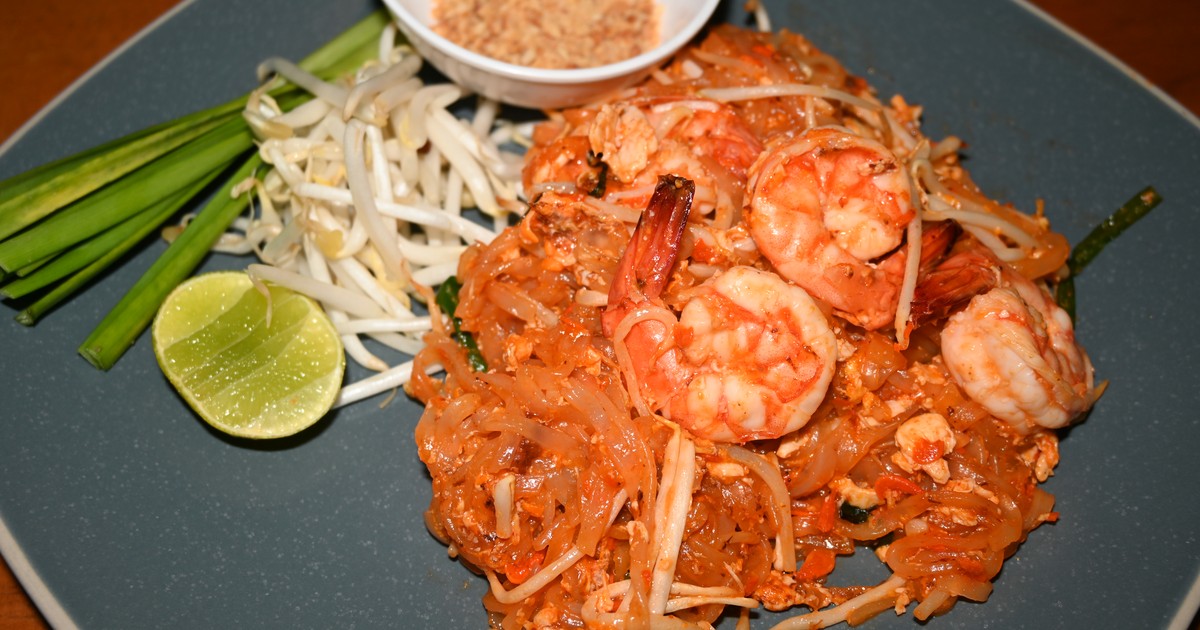
Thai night, you order pad Thai. Rice noodles, a bit of sauce, sprouts, peanuts — it looks light. Then the plate arrives, well filled, shiny with oil, with a generous handful of peanuts and pink shrimp on top. You wonder: what does that really add up to?
Short answer: a classic shrimp pad Thai (80 g of dry rice noodles, 80 g of shrimp, one egg, a little tofu, 18 g of oil, 15 g of peanuts, sugar and fish sauce) comes to about 820 kcal. With chicken, count on roughly 850 kcal. With pork, around 870 kcal. A lighter tofu version, with fewer noodles and less oil, drops to about 530 kcal. And a large restaurant plate, well oiled with a double helping of peanuts, easily goes past 1,180 kcal. The figures come from the French Ciqual 2025 food composition table (Anses), ingredient by ingredient.
Where do the calories in pad Thai come from?
Pad Thai is a wok that mixes five big calorie sources. Here’s what each piece adds up to, using the portions you typically find in a “regular” restaurant plate:
- Rice noodles (80 g dry, about 200 to 220 g once cooked): about 290 kcal. That’s the base of the plate. The more the kitchen piles on, the higher it climbs.
- Wok oil (a generous tablespoon, 15 to 20 g): 135 to 180 kcal. You don’t see it, but it’s everywhere.
- Shrimp (100 g cooked): about 91 kcal. One of the lightest proteins in pad Thai.
- Chicken (100 g grilled breast): 141 kcal.
- Pork (100 g cooked tenderloin): 168 kcal.
- Tofu (50 g): 74 kcal.
- Egg (one hard-boiled or stir-fried egg, 50 g): 67 kcal.
- Roasted peanuts (one tablespoon, 15 g): about 97 kcal. A double handful (30 g) doubles that: nearly 190 kcal.
- Sugar (one tablespoon, 15 g): 60 kcal. Pad Thai sauce often includes it, along with tamarind and fish sauce.
- Fish sauce / nuoc mam (one tablespoon, 15 g): about 12 kcal, but plenty of salt.
- Bean sprouts (40 g): barely 11 kcal. Pile them on.
- Lime: a few calories, a lot of flavour.
How many calories, plate by plate?
To compare, we always start from 80 g of dry rice noodles (except the light version), one egg, sprouts, peanuts, sugar and fish sauce. Only the protein and the amount of oil change.
| Pad Thai | What’s in it | Calories (approx.) |
|---|---|---|
| Light tofu | 50 g dry noodles, less oil, more sprouts, 80 g tofu | 530 kcal |
| Shrimp | Base + 80 g shrimp, 18 g oil, 15 g peanuts | 820 kcal |
| Chicken | Base + 100 g chicken | 850 kcal |
| Pork | Base + 100 g pork | 870 kcal |
| Classic tofu | Base + 120 g tofu | 880 kcal |
| Large restaurant, double peanut | 110 g dry noodles, more oil, 30 g peanuts, more sugar | 1,180 kcal |
Calculated from the Ciqual 2025 values for each ingredient. Macro-wise, the classic shrimp pad Thai works out at roughly 41 g of protein, 86 g of carbs and 34 g of fat. The light tofu version: 25 g of protein, 56 g of carbs and 22 g of fat.
One caveat: every restaurant has its own hand. Some use very little oil, others glaze the plate. The figures in the table are reference points, not absolute truth.
Want to know what your pad Thai really adds up to? Snap it before you mix it. Try BiteFrame →
How does it compare with other dishes?
A shrimp pad Thai (820 kcal) sits at the same level as a salmon poke bowl with spicy mayo (about 880 kcal) and a little above a plate of chicken couscous (about 760 kcal). It weighs more than a croque-monsieur (400 to 600 kcal) and matches a generous restaurant moussaka. The large plate with double peanuts gets close to a raclette evening (around 1,100 kcal) or a big plate of mussels and fries. The difference is that a well-built pad Thai brings protein, crunchy sprouts and lime: it really fills you up, especially with shrimp or tofu.
How to lighten your pad Thai without making it sad
- Ask for fewer noodles, more sprouts. That’s the move that pays off most: dropping from 80 g to 50 g of dry noodles saves about 110 kcal, and the plate still looks full.
- Take the sauce and peanuts on the side. One spoon of peanuts is already 100 kcal. When you sprinkle them yourself, you often use half as much.
- Choose shrimp or tofu. They save 50 to 80 kcal compared with pork, for just as much pleasure.
- Ask for less oil / “less oily”. One tablespoon of oil less is about 90 kcal saved.
- Watch the sugar hidden in the sauce. Pad Thai is salty-sweet: less sauce means less sugar.
- Keep the lime and sprouts. Zero (or almost) calories, plenty of freshness.
- Share the plate or save half for tomorrow. A large restaurant portion often tops 1,000 kcal on its own.
Make pad Thai at home: open the fridge
Homemade pad Thai is the perfect dish for emptying the fridge. Leftover rice noodles, eggs, a pack of sprouts, a bit of tofu or frozen shrimp, a handful of peanuts… Snap your fridge with BiteFrame. In the app camera, next to product scan and barcode, the “What am I cooking?” option spots the ingredients and suggests recipes with what you already have. Often there’s a good wok waiting for you without you knowing it.
Estimate your pad Thai from a photo with BiteFrame
Pad Thai looks easy to count, but it’s a trap: the noodles hide under the sauce, the oil vanishes, and the peanuts sink to the bottom. With BiteFrame, you take a photo of your plate and the AI estimates calories and macros. Easiest: a top-down photo just as the plate arrives, before you mix everything. If you buy a ready-made pad Thai at the supermarket, scan the barcode for the label values. It remains an estimate: double-check the amount of noodles, oil and peanuts, and adjust if needed.
Quick questions
How many calories in shrimp pad Thai?
About 820 kcal for an average restaurant plate (80 g dry noodles, shrimp, egg, oil, peanuts and sauce). A large plate with more noodles and double peanuts can go past 1,100 kcal.
Is pad Thai good for weight loss?
It can be, in a lighter version: fewer noodles, more sprouts, shrimp or tofu, sauce and peanuts on the side. You then land around 500 to 600 kcal, still with protein and crunch. The generous restaurant version is a full meal — place it in your day knowingly.
How many calories in pad Thai noodles?
About 365 kcal per 100 g of dry rice vermicelli (Ciqual), so about 290 kcal for 80 g. Once cooked they weigh two to three times more, but the calories stay the same.
How many calories in the peanuts on pad Thai?
Roasted peanuts are about 644 kcal per 100 g. Count 100 kcal for one tablespoon (15 g) and nearly 190 kcal for a double handful (30 g).
Shrimp, chicken or tofu pad Thai: which is lightest?
Shrimp (about 91 kcal per 100 g) and tofu (147 kcal per 100 g, often in a smaller portion) are the lightest. Chicken breast is 141 kcal, pork around 168 kcal. The real difference, though, still comes mostly from the oil and the noodles.
This information is for guidance only and does not replace advice from a healthcare professional.
Sources
Photo: PattayaPatrol, Wikimedia Commons (cropped), CC BY-SA 4.0