How many calories in moussaka? 400 to 800 kcal a plate
Moussaka: about 140 kcal per 100 g according to Ciqual, so 400 to 800 kcal a plate depending on oil, béchamel and portion size. The numbers, and how to lighten it.
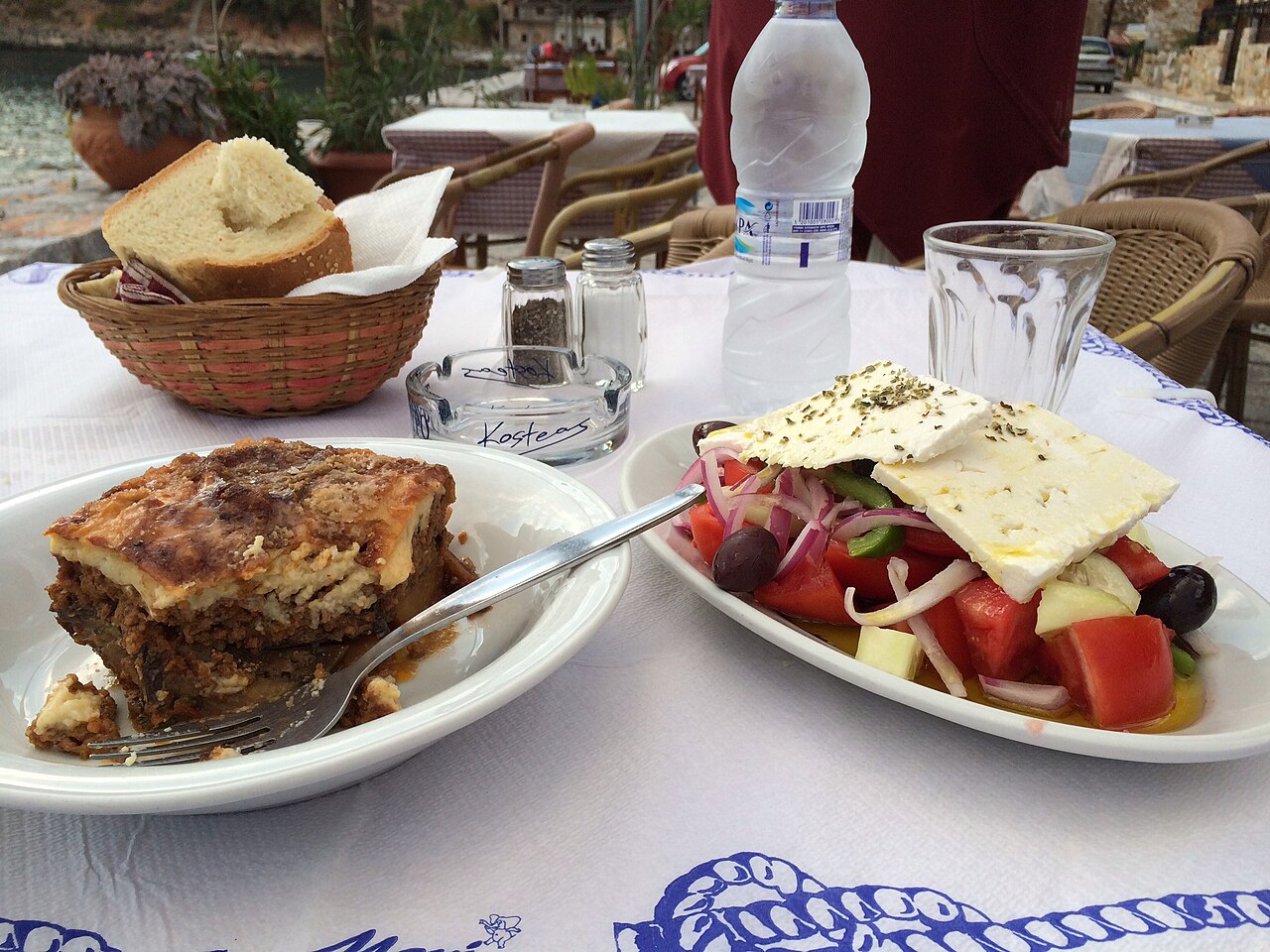
That golden crust that cracks under your fork. The béchamel, still soft underneath. Aubergines, meat with a hint of cinnamon… Moussaka is the dish you order on holiday without a second thought. It's also the one that hides its numbers best.
Short answer: a homemade portion of around 300 g comes in at about 420 kcal. At a Greek restaurant, where a portion is often 400 to 500 g and the aubergines have soaked up plenty of oil, you're looking at 600 to 800 kcal. The French Ciqual food composition table (Anses) lists moussaka at 138 kcal per 100 g.
"But isn't it mostly vegetables?"
On paper, yes. On the plate, it's another story:
- The aubergines: on their own they weigh almost nothing. But pan-fried, they soak up oil like a sponge. That's often where it all happens, and you can't see it.
- The minced meat: lamb or beef, it brings the protein and a good share of the fat. Lamb is usually fattier than 5% beef.
- The béchamel: butter, flour, milk, sometimes an egg yolk. A thick layer on top adds up.
- The cheese: a little parmesan or kefalotyri browned on top is delicious, and it adds up fast.
- The potatoes: some recipes slip a layer in at the bottom. More carbs, more calories.
Some ballpark figures
| Case | Calories (ballpark) | Source |
|---|---|---|
| Moussaka, per 100 g | 138 kcal | Ciqual table (Anses) |
| Homemade portion of about 300 g | about 420 kcal | Calculated from the Ciqual value |
| Large restaurant portion, 450 g | about 620 kcal, often more if the aubergines are fried | Calculated from the Ciqual value |
| One extra tablespoon of oil for cooking | adds about 90 kcal | Calculated from Ciqual values |
The Ciqual figure is for an "average" moussaka. A version heavy on oil and béchamel can go well above 140 kcal per 100 g.
How to size up your portion at a glance
- Look at the size: a slice that fills the plate is often 400 g or more.
- Check for potatoes: a layer underneath? Round up.
- Judge the béchamel: a thin coat and two centimetres of golden topping are not the same thing at all.
- Don't forget what's around it: bread plus a Greek salad with a nice slab of feta and a drizzle of oil, like in the photo, can almost double the meal.
How to lighten it without ruining it
- Roast the aubergines in the oven, just brushed with oil, instead of frying them. This is by far the change that matters most.
- Use 5% fat minced beef, or go half meat, half lentils.
- Make the béchamel with semi-skimmed milk, less butter, and spread it in a thin layer.
- Keep the cheese for the top, just enough to brown it.
- Serve it with a green salad rather than bread and chips.
Estimate your moussaka from a photo with BiteFrame
Between the oil you can't see and the béchamel hiding under the crust, moussaka is genuinely hard to judge by eye. BiteFrame recognises Mediterranean dishes as well as Belgian classics, and estimates calories from a single photo of your plate. It's still an estimate: double-check the portion size, and mention if the aubergines were fried.
This information is for guidance only and does not replace advice from a health professional.