How many calories are in bibimbap? From 490 to over 1,100 kcal
Bibimbap: from 490 to over 1,100 kcal per bowl depending on the rice, sesame oil and meat, based on Ciqual. Pork, beef or veggies: the real numbers.
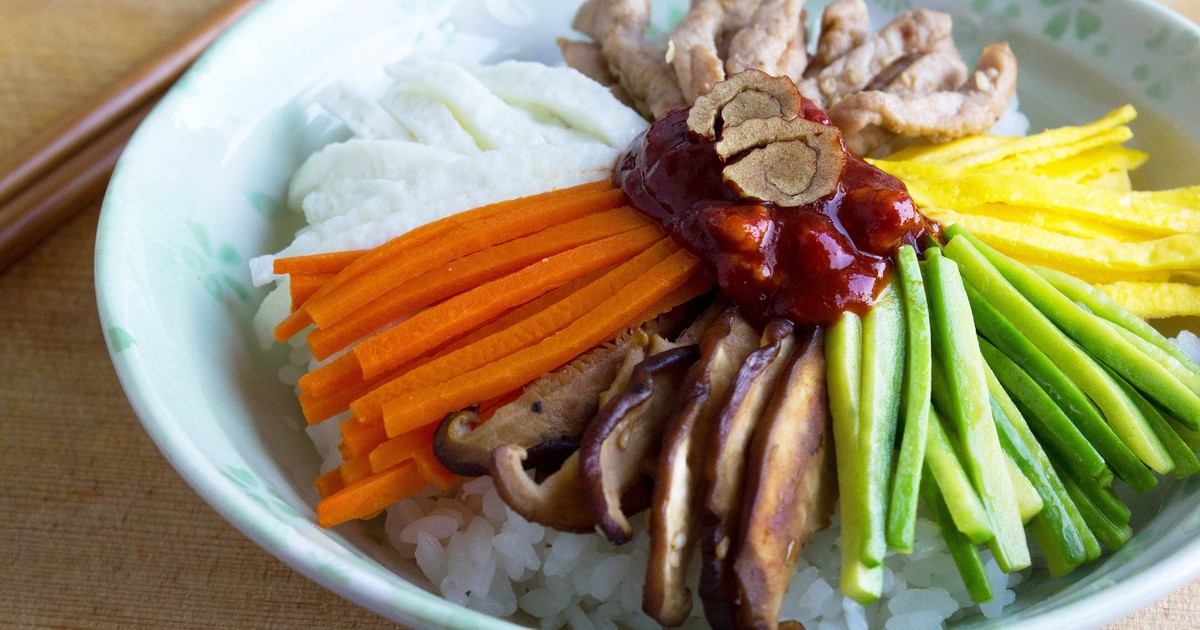
Korean restaurant night, you order a bibimbap. A neat bowl of rice, colourful veg, an egg, a spoonful of red sauce — it looks like the healthy choice. Then you mix it, you eat it, and you wonder: is it really that light?
Short answer: a pork bibimbap like the one in the photo (200 g of cooked rice, 70 g of pork, vegetables, an egg, sesame oil and gochujang sauce) comes to about 730 kcal. With beef and a fried egg, count on roughly 690 kcal. A lighter version, with less rice and more vegetables, drops to about 490 kcal. And a big restaurant bowl, with 330 g of rice and more oil, easily goes past 1,140 kcal. The figures come from the French Ciqual 2025 food composition table (Anses), ingredient by ingredient, except for the gochujang sauce (see below).
What’s in a bibimbap, and what each part weighs
“Bibimbap” roughly means “mixed rice”. In the bowl in the photo you can see white rice, strips of pork, shiitake mushrooms, carrots, cucumber sticks, strips of omelette and a big dollop of gochujang. Here’s what each piece adds up to in our pork bowl:
- Cooked white rice (200 g): about 310 kcal. That’s the big one, more than 40% of the bowl.
- Pork (70 g of cooked tenderloin): about 118 kcal.
- Egg (50 g, fried egg with no added fat): about 79 kcal.
- Sesame oil and cooking oil (10 g in total): about 90 kcal. You hardly see it, but it’s there.
- Gochujang sauce (20 g): about 45 kcal. It’s sweet and spicy.
- Sugar in the marinade (5 g): about 20 kcal.
- Shiitake mushrooms (40 g, cooked): about 24 kcal.
- Carrots (50 g, cooked): about 17 kcal.
- Cucumber (50 g): about 8 kcal.
- Soy sauce (8 g): about 3 kcal, but a lot of salt.
- Sesame seeds (3 g): about 17 kcal.
All in all that’s about 730 kcal for a bowl of just over 500 g. The vegetables barely register: all of them together come to less than 50 kcal.
How many calories, bowl by bowl?
To compare, we mostly change the rice, the meat and the oil. The “pork” bowl is the one in the first photo.
| Bibimbap | What’s in it | Calories (approx.) |
|---|---|---|
| Light, veg + egg | 150 g rice, 5 vegetables, an egg, a little oil | 490 kcal |
| Beef + fried egg | 200 g rice, 70 g beef, carrots, egg | 690 kcal |
| Pork (as in the photo) | 200 g rice, 70 g pork, vegetables, egg | 730 kcal |
| Large restaurant bowl | 330 g rice, 100 g beef, more oil and sauce | 1,140 kcal |
Calculated from the Ciqual 2025 values for each ingredient. Macro-wise, the pork bowl works out at about 36 g of protein, 92 g of carbs and 23 g of fat. The light bowl: 18 g of protein, 64 g of carbs and 17 g of fat.
One caveat: every restaurant has its own hand. Some pile on the rice, others drizzle everything with sesame oil. These figures are reference points, not absolute truth. They are also estimates: we couldn’t find an official French table for a whole bibimbap, so we recalculated ingredient by ingredient.
Want to know what your bibimbap really adds up to? Snap it before you mix it. Try BiteFrame →
And the restaurant version?
Here’s another version, with marinated beef, a fried egg sprinkled with sesame, grated carrots, a few salad leaves and red cabbage. Same dish, different plate: it’s the “beef + egg” bowl in the table, around 690 kcal.
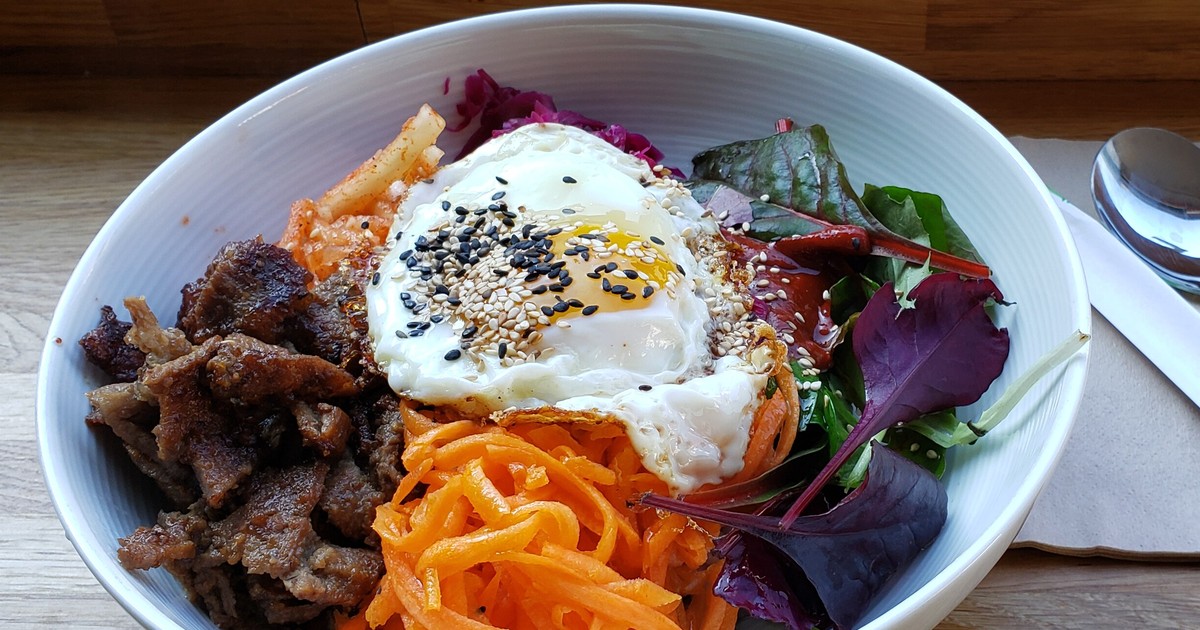
Photo: Andy Li, Wikimedia Commons (cropped), CC0.
Salt: the thing to watch
Bibimbap comes with soy sauce and gochujang, and both are salty. In the Ciqual table, soy sauce contains 13.1 g of salt per 100 g: one tablespoon (15 g) already gives you about 2 g. The USDA record for the gochujang we used lists 2,750 mg of sodium per 100 g, which is about 7 g of salt: with 20 g of sauce, that’s about 1.4 g of salt. The World Health Organization recommends staying under 5 g of salt a day for an adult. In our pork bowl, the soy sauce in the marinade (8 g) and the gochujang (20 g) already add up to about 2.4 g of salt between them. That figure comes from a single branded product: gochujang varies from brand to brand.
How does it compare with other dishes?
A pork bibimbap (730 kcal) sits a little below a shrimp pad Thai (about 820 kcal) and a salmon poke bowl with spicy mayo (about 880 kcal), and level with a plate of chicken couscous (about 760 kcal). The big restaurant bowl matches a raclette night (around 1,100 kcal). The difference: a well-built bibimbap brings varied vegetables, protein and plenty to fill you up.
How to lighten your bibimbap without making it sad
- Ask for a bit less rice. Going from 200 g to 150 g of cooked rice saves about 78 kcal, and the bowl is still full of vegetables.
- Load up on veg. Shiitake, carrots, spinach or bean sprouts cost almost nothing in calories and make the bowl more filling.
- Take the sauce on the side. 20 g of gochujang is about 45 kcal, plus quite a bit of salt. Start with half, taste, then add more.
- Watch the sesame oil. One extra spoonful (10 g) is about 90 kcal more.
- Keep the egg. For about 79 kcal it brings protein and softness.
- Share it or keep half for later. A large restaurant bowl often goes past 1,000 kcal on its own.
Make your own bibimbap: open the fridge
Bibimbap is the perfect fridge-clearing dish. Half a carrot, a handful of spinach, a few mushrooms, yesterday’s leftover rice, an egg… every vegetable can join in. Snap your fridge with BiteFrame: in the app’s camera, next to the product scan and the barcode, the “What do I cook?” option spots your ingredients and suggests recipes using what you already have. Chances are a good bowl is already waiting for you and you didn’t know it.
Estimating your bibimbap from a photo with BiteFrame
Bibimbap is a dish where everything gets mixed together: rice, sauce, oil. Hard to count in your head. With BiteFrame, you snap your bowl and the AI estimates calories and macros. The easiest way: a photo from above, as soon as the bowl arrives, before you mix. If you buy a ready-made bibimbap at the supermarket, scan the barcode to get the label values. It’s still an estimate: check the amount of rice, oil and sauce above all, and adjust if needed.
Quick questions
How many calories are in a bibimbap?
About 730 kcal for a pork bowl of around 500 g (200 g of cooked rice, 70 g of pork, vegetables, an egg, sesame oil and gochujang). The light version is around 490 kcal, and a big restaurant bowl goes past 1,100 kcal.
Is bibimbap good for losing weight?
It can be in a lighter version: less rice, more vegetables, sauce on the side and an egg for protein. You end up around 500 kcal. The big restaurant bowl is a full meal in itself, to be fitted into your day knowingly.
How many calories are in the rice of a bibimbap?
About 155 kcal per 100 g of cooked white rice (Ciqual), so about 310 kcal for 200 g.
How many calories are in gochujang sauce?
The USDA record we used (a branded product) lists 225 kcal per 100 g, so about 45 kcal for 20 g. Other branded products in the USDA database range from 194 to 300 kcal per 100 g depending on the recipe.
Pork, beef or vegetable bibimbap: which has the fewest calories?
The vegetable-and-egg bowl with no meat and less rice: about 490 kcal. Between pork (168 kcal per 100 g) and beef (rump steak, 138 kcal per 100 g) the gap is small: at 70 g it’s about 20 kcal. The real difference comes mostly from the rice and the oil.
This information is provided for guidance only and does not replace the advice of a healthcare professional.